


How to Reduce Chemical Exposure During Cleaning
Table of Contents
Why Cleaning Chemical Exposure Happens and Who Is at Risk
Last Updated: November 12, 2026
Cleaning chemicals are part of almost every workplace, but many people breathe in or touch more of them than they need to.
Most exposure comes from three things: fumes from sprays, residue left on skin and surfaces, and mixing products without understanding what they contain. Cleaning in small, closed spaces makes the problem worse because vapors have fewer places to go.
Who is at risk? Janitorial staff, facility workers, and anyone who cleans on a regular schedule face the highest exposure. Others also need to pay attention:
Children and pets, who sit or play close to freshly cleaned surfaces
People with asthma or other breathing conditions
Pregnant workers and building occupants
Watch out: Spraying in a closed room and then staying inside is one of the most common ways people breathe in more product than they should.
Cleaning Chemical Safety Starts With Product Selection
The safest step is choosing products with fewer hazardous ingredients from the start. Look for products that list fewer fragrances, fewer strong irritants, and lower levels of volatile organic compounds (VOCs).
Some practical selection tips:
Choose the mildest product that still does the job
Use disinfectants only on surfaces that need them, such as high-touch areas
Pick concentrates you can dilute correctly, which can cut down on storage and handling; if you'd rather hand off the chemical work entirely, electrostatic spraying and cold fogging methods are one lower-exposure option to consider.
Eco-friendly products can be a good option, but they are not always a direct substitute for stronger disinfectants. Check the label to confirm what a product is approved to do.
Reading Labels, Hazard Pictograms and Ingredient Disclosures
Every cleaning product label carries safety information, but the label only lowers your risk if you know how to interpret it. Most people scan for the product name and the directions and skip the rest. A short label-reading routine before you buy or open a product is one of the fastest ways to cut exposure.
Start with the signal word
The signal word tells you how hazardous the product is under the federal hazard communication standard enforced by the Occupational Safety and Health Administration (OSHA) for workplace products, and under the Federal Hazardous Substances Act for many consumer products. The two words you will see most are:
Danger: the higher hazard level. Products labeled Danger are more likely to cause severe burns, poisoning, or other serious harm if misused.
Warning: a moderate hazard level. The product can still injure you, but the risk is lower than a Danger product.
Caution: the lowest of the three signal words on consumer products. It still means the product can cause harm, especially with repeated or concentrated exposure.
A product with no signal word is not automatically safe, it may simply fall outside the labeling rules, so read the rest of the label before you assume it is low-hazard.
Decode the hazard pictograms
Workplace products regulated under OSHA's Hazard Communication Standard use pictograms: black symbols inside a red diamond border. The ones most relevant to cleaning are:
Flame: flammable. Keep away from heat, sparks, and open flames, and do not store near a water heater or furnace.
Corrosion: can burn skin and eyes and damage metal. These are the products that most often require gloves and splash goggles.
Exclamation mark: irritant or harmful. Common for products that irritate skin, eyes, or airways.
Consumer products often use a different system: a warning label with first-aid and storage statements rather than pictograms. If you clean as part of a job, your employer's hazard communication program should provide Safety Data Sheets (SDS) for each product, and those sheets use the pictogram system.
Read the directions as exposure controls
The directions are not just about cleaning performance. They tell you how to limit exposure:
Dilution ratio: using more concentrate than directed does not clean better. It leaves more residue and puts more chemical into the air and onto your skin.
Contact time: disinfectants need a specified wet contact time to work. Spraying and immediately wiping defeats the purpose and may push you to over-apply.
Surface limits: some products are not for food-contact surfaces, porous materials, or certain finishes. Using them anyway can leave residue where people eat or touch.
Ventilation instructions: some labels specify open windows, exhaust fans, or use only in well-ventilated areas. Treat that as a requirement, not a suggestion.
Use ingredient disclosures to compare products
Ingredient disclosure varies by product type. Workplace products should have an SDS listing hazardous ingredients and their concentrations. Many consumer products list active ingredients (the part that disinfects or cleans) and may list other ingredients in descending order of concentration. When comparing two products for the same job:
Prefer the product with the lower-hazard signal word if it will do the job.
Prefer products that disclose ingredients over those that do not.
Check whether the active ingredient is one you can use safely with the ventilation and PPE you actually have.
Note fragrances and added scents, they are a common source of irritation and are often listed separately.
Watch out: A product marketed as "natural" or "green" can still carry a Warning or Danger signal word. Judge it by the label, not the front of the bottle.
Keep the label with the product
If you transfer a product into a spray bottle or secondary container, label the new container with the product name and the hazard information. An unlabeled bottle is one of the most common ways people use the wrong product or skip precautions.
The article's signal words and pictograms can be scanned quickly, so here is a summary of what each one tells you about cleaning product hazards.
Label item | What it means | Action |
Danger | Higher hazard; severe burns or poisoning if misused | Use most cautiously |
Warning | Moderate hazard; can still injure | Read full label before use |
Caution | Lowest consumer signal word; harmful with repeated exposure | Limit repeated or concentrated contact |
Flame | Flammable | Keep away from heat and sparks |
Corrosion | Burns skin and eyes, damages metal | Wear gloves and splash goggles |
Exclamation mark | Irritant or harmful | Limit skin, eye and airway contact |
Health hazard | Serious longer-term effects with repeated exposure | Minimise repeated exposure |
Gas cylinder | Pressurised contents | Relevant to aerosols |
Cleaning Chemicals and Ventilation: A Room-by-Room Plan
Ventilation is one of the simplest ways to reduce exposure, and learning how to reduce chemical exposure during cleaning often starts there. Good airflow carries fumes away from the people doing the work. Plan your cleaning by room so ventilation and low-exposure methods are part of the routine.
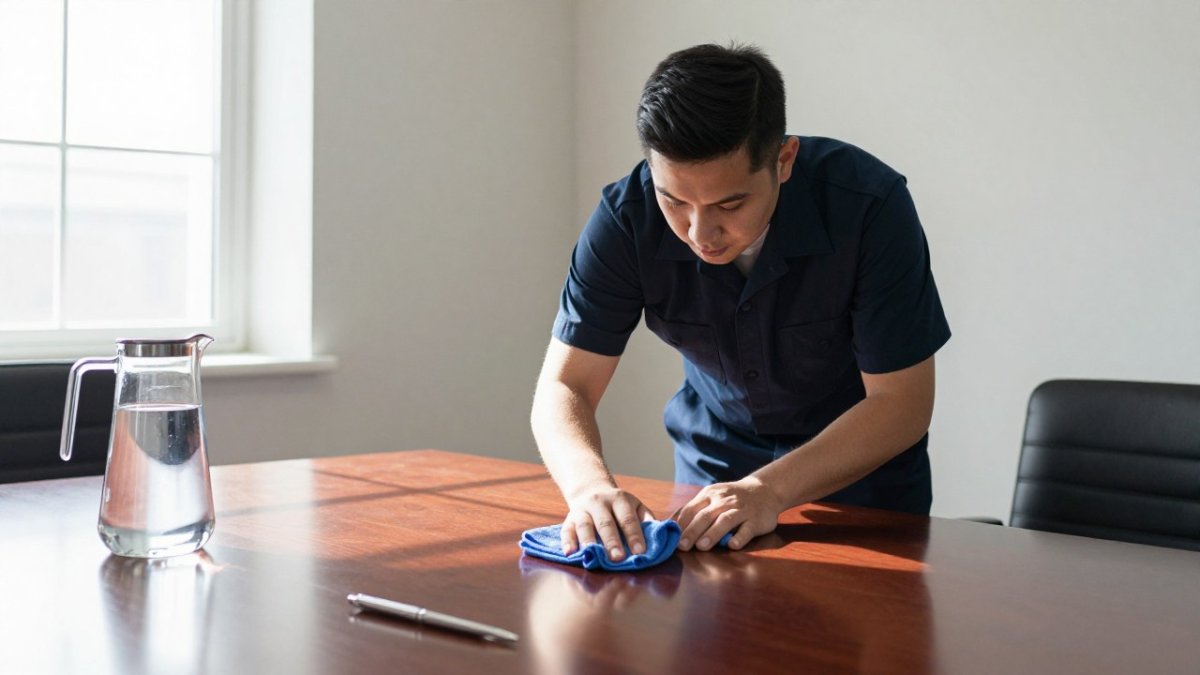
Restrooms: Run the exhaust fan and open a window if you can. Use a damp microfiber cloth instead of spraying into the air where possible.
Kitchens and break rooms: Clean food-contact surfaces with products rated for food areas, and rinse where the label directs.
Offices: Dust and vacuum with HEPA-filtered equipment to remove particles without stirring them into the air.
Hallways and lobbies: Use wet mopping with diluted product rather than heavy spraying.
Clean in the order of cleanest to dirtiest areas, and never leave a sprayed room with the door shut.
Personal Protective Equipment for Cleaning Chemicals
Personal protective equipment (PPE) is the last line of defense, not the first. Ventilation, product selection, and careful technique reduce exposure before PPE has to. But for some tasks, pouring concentrate, spraying overhead, or cleaning a confined restroom, the right gear makes a real difference. The key is matching the gear to the exposure route.

Match PPE to the exposure route
Cleaning chemicals reach you three main ways: through your lungs (inhalation), through your skin (dermal contact), and through your eyes (splash or vapor). Each route calls for different controls.
Inhalation. Sprays, aerosols, and vapors are the main inhalation risk. Controls, in order of preference:
Use a damp cloth or a trigger spray that produces a coarse stream rather than a fine mist.
Ventilate: open windows, run exhaust fans, and avoid spraying in small closed rooms.
If the label or your employer requires respiratory protection, use a properly fitted respirator, a loose dust mask is not a substitute for a respirator rated for chemical vapors.
Skin contact. Concentrates, wet work, and prolonged contact are the main dermal risks. Controls:
Wear chemical-resistant gloves for handling concentrates and for any task where your hands stay wet. Nitrile gloves are a common choice for many cleaning products; check the product's SDS or label for glove guidance, because some chemicals penetrate nitrile.
Avoid soaking hands in cleaning solution. Use a cloth or mop rather than a bare hand.
Wash hands after cleaning, even if you wore gloves, and moisturize to reduce cracking that lets chemicals in.
Eye contact. Splashes happen most when pouring, diluting, or spraying overhead. Controls:
Wear splash goggles, not just safety glasses, when pouring or diluting concentrates and when spraying above shoulder height.
Keep the spray nozzle pointed away from your face and at a downward angle.
Do not rub your eyes with gloved hands.
A task-based PPE checklist
Use this as a starting point, then adjust based on the product label and your employer's requirements:
Read the label and SDS before opening the product
Put on chemical-resistant gloves before handling concentrate
Add splash goggles when pouring, diluting, or spraying overhead
Open windows or run exhaust fans before spraying
What PPE does not do
PPE does not remove the chemical from the air, and it does not make a high-hazard product safe for a task it was not meant for.
Watch out: Reusing disposable gloves or wearing them while touching your face, phone, or door handles can spread chemical residue to surfaces and to your skin. Remove gloves before leaving the cleaning area and wash your hands.
Recognizing Cleaning Chemical Exposure Symptoms and What to Do
Symptoms of exposure are often mild at first. Pay attention to how you feel during and after cleaning.
Common signs include:
Coughing, wheezing, or throat irritation
Headache or dizziness
Itchy, red, or burning skin
Watery or stinging eyes
If you notice these symptoms, move to fresh air right away.
Call a doctor or poison control center if symptoms are severe, don't go away, or if someone has swallowed a product.
People with asthma, children, pregnant workers, and pets may react more strongly.
Booking a Chemical-Safe Cleaning Program for Your Facility
If your facility needs regular cleaning without the chemical risks of doing it in-house, a professional cleaning program can help.
Request a quote from CVG Specialized Cleaning INC to find out what a safer, scheduled cleaning program would look like for your building. Their team also offers no-touch bathroom cleaning and HEPA-filtered vacuuming as part of a Connecticut facility program.
Frequently Asked Questions
Does eco-friendly cleaning always mean it's safe? Not always.
Can I mix cleaning products to make them stronger? No. Mixing cleaning products can create dangerous fumes.
Do I always need a mask when cleaning? Not every task requires a respirator.
Is natural always better than chemical? Natural ingredients can still irritate skin or lungs.
Frequently Asked Questions
What to do if you breathe in cleaning chemicals?
Move to fresh air right away and keep the area ventilated. Stop using the product, and read the label's first-aid section. If you have trouble breathing, chest tightness, dizziness or confusion, call 911 or Poison Control at 1-800-222-1222. Bring the product container with you so responders can identify the ingredients. Do not return to the room until it has aired out and the symptoms have resolved.
How can ventilation reduce exposure to cleaning chemicals?
Ventilation dilutes airborne vapors and fumes before they reach your breathing zone. Open windows, run exhaust fans and direct airflow away from workers. Ventilate during and after cleaning, and wait for the room to air out before reentering. Ventilation helps most when combined with lower-exposure methods such as damp wiping instead of aerosol sprays, and it does not replace label-directed product use.
Why should you never mix bleach with other cleaning products?
Mixing bleach with ammonia-based cleaners releases chloramine gas, and mixing it with acids such as some vinegar or toilet bowl cleaners releases chlorine gas. Both can cause coughing, burning eyes and breathing difficulty. Use one product at a time, rinse surfaces between products, and follow the label's dilution directions. Store incompatible products apart.
What personal protective equipment should you wear when using cleaning chemicals?
Wear chemical-resistant gloves matched to the product, splash-resistant goggles and, where the label or a risk assessment calls for it, a respirator. Long sleeves and closed shoes reduce skin contact. Check the label for the specific glove material recommended, replace damaged gloves, and wash hands after removing them. Gloves and goggles protect only when they fit and are used consistently.
Comments