


Is Sewage Backup Cleanup a Job for Professionals?
Last Updated: November 8, 2026
Quick Summary
Sewage backup cleanup is a job for professionals because raw sewage is Category 3 water carrying bacteria, viruses, and pathogens that contaminate any porous material it touches. Porous materials like drywall and carpet cannot be reliably disinfected and must be removed, and reopening requires documented moisture readings and disinfection steps.
Water from a backed-up sewer line is classified as Category 3 water, the most contaminated category.
Stop the source first, then cut power to affected circuits if water is near outlets or equipment.
Clean surfaces with detergent before applying disinfectant, since disinfectant on organic matter does not work.
Evacuate when sewage has spread into an occupied area or contaminated water is near electrical panels.
Reopen only when the source is repaired, porous material removed, surfaces disinfected, and moisture readings confirm dryness.
Sewage backup in your building right now?
CVG Specialized Cleaning INC provides certified emergency disinfection and deep cleaning for commercial facilities.
Table of Contents
Why Commercial Sewage Backups Are a Biohazard Emergency
A sewage backup in a commercial building is not a plumbing inconvenience. It is a biohazard event that puts staff, customers, and the structure itself at risk within hours. Raw sewage carries bacteria, viruses, and pathogens, and any porous material it touches becomes contaminated waste. Every backup should be treated as an infection-control problem first and a cleanup problem second.
Water from a backed-up sewer line is classified as Category 3 water, the most contaminated category. That classification matters because it dictates what can be saved and what must be discarded. The IICRC S500 standard for water damage restoration sets the framework professionals use to make that call.
Two things make commercial backups worse than residential ones. First, more people share the space, so exposure risk multiplies. Second, a commercial property usually cannot simply shut down while the problem is sorted out. That tension between safety and business interruption drives every decision that follows.
Commercial Sewage Cleanup Response Steps
Speed decides the outcome. The first hour after discovery sets the ceiling on how much damage the building takes and how long it stays closed. Below is the sequence we follow, and the order matters as much as the actions themselves.

Immediate Actions in the First Hour
Stop the source before you touch anything wet. Shut off water supply valves and, if sewage is still flowing backward, call a licensed plumber to address the sewer line or lateral line blockage. Then cut power to any affected circuits at the breaker panel if water is near outlets or equipment.
Next, isolate the area. Close doors, block corridors, and post signage. Nobody walks through raw sewage in street shoes.
Document everything before cleanup starts: photograph standing water, damaged materials, and affected equipment. This record supports your insurance claim later.
Restricting Access and Protecting Occupants
Only trained staff in proper protective equipment should enter the contaminated zone. That means gloves, boots, eye protection, and respiratory protection at minimum. Anyone with open cuts or a compromised immune system stays out entirely.
Watch out: the most common mistake we see is a well-meaning employee mopping up a small backup with a paper towel and a household cleaner. That spreads contamination across a wider floor area and puts the person in direct contact with pathogens.
Sewage Cleanup and Disinfection Procedures
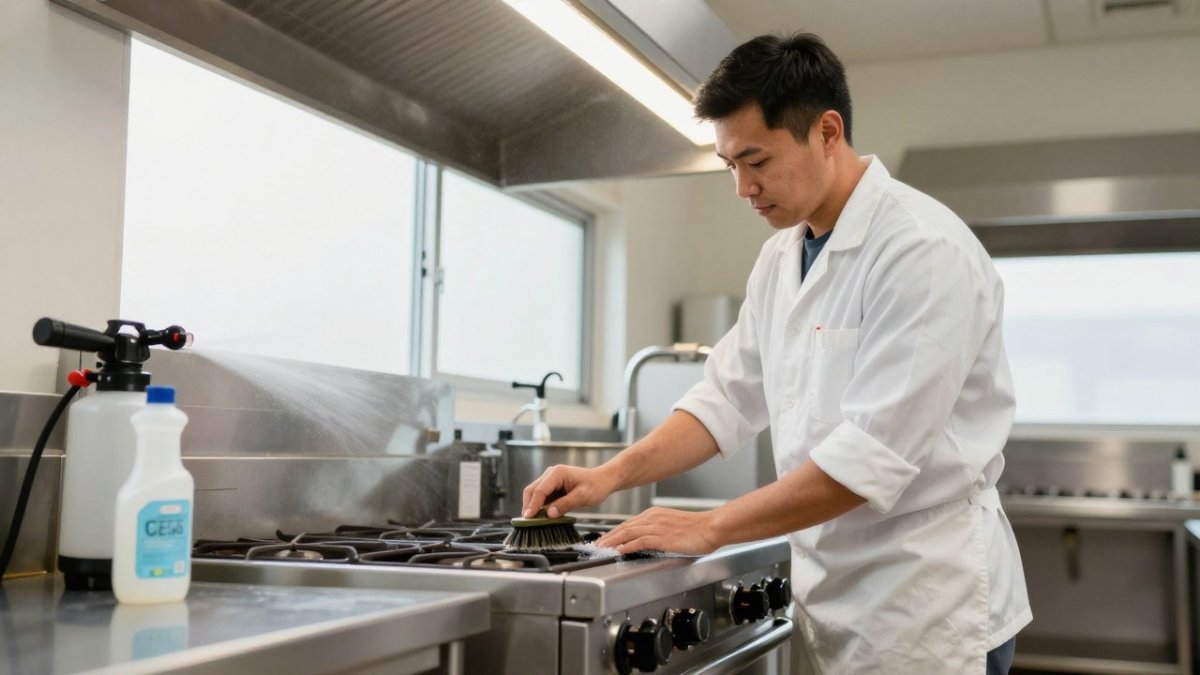
Extraction comes first. Standing water and sewage get removed with wet vacuums and pumps, then bagged as hazardous waste. Only after the bulk material is gone does cleaning begin, and cleaning means washing surfaces with detergent before any disinfectant touches them. Disinfectant applied to organic matter does not work.
Material-Specific Remediation: What Can Be Saved and What Cannot
This is the decision most facility managers get wrong. The general rule: porous materials that absorbed contaminated water cannot be reliably disinfected and must be removed.
Material | Action | Reason |
Drywall below flood line | Remove and replace | Porous, absorbs pathogens |
Carpet and padding | Discard | Cannot be fully decontaminated |
Hard tile and concrete | Clean and disinfect | Non-porous, salvageable |
Metal fixtures | Clean, disinfect, dry | Salvageable with thorough cleaning |
Wood framing | Assess case by case | May require removal if saturated |
Drying, Deodorizing, and Post-Cleanup Verification
Moisture left behind feeds mold, and mold can start growing within a day or two in a warm, damp space. Drying equipment and moisture readings are used to bring structural moisture down to a verified level. Deodorizing comes after drying, not before.
Verification should be documented with moisture readings, photos, and a written record of the disinfection steps taken. That file can protect you if an inspector or insurer asks questions later.
Commercial Sewage Backup Cleanup Cost: What Drives the Bill
There is no single price for sewage backup cleanup, and pricing depends on the scope of the job. For current pricing, contact CVG Specialized Cleaning INC for a quote.
The affected area is the first multiplier. Square footage sets labor hours, extraction time, and the volume of disinfectant and disposal bags consumed.
Contamination level is the second. Category 3 water, the classification raw sewage carries, forces removal of porous materials rather than cleaning them. That single rule can turn a modest square footage into a large disposal bill, because drywall, carpet, ceiling tile, and insulation all leave as regulated waste.
Water volume and migration matter as much as the visible puddle. Sewage wicks up drywall, travels under flooring, and pools in wall cavities.
Building use changes the labor and equipment package. A restaurant with grease traps and food-contact surfaces, a healthcare space with infection-control requirements, and a warehouse with open floor slab each require different protocols, different PPE levels, and different verification steps. Higher protocol means more labor hours per square foot.
After-hours response is a real line item. Nights, weekends, and holidays require mobilizing crews and equipment outside normal scheduling, and that premium shows up in the invoice. It is also the line most worth confirming in writing before you authorize work.
Timeline follows the same drivers. Extraction and demolition of contaminated material can often be completed in the first day or two, but drying is measured in days, not hours, and verification comes after drying.
What a credible estimate should itemize: extraction and demolition scope, material disposal, cleaning and disinfection steps, drying equipment and monitoring days, verification documentation, and any after-hours premium. Ask for the drying plan and the verification method in writing.
Watch out: the cheapest bid is often the one that skips moisture mapping and verification, which shifts the mold risk and the reopening decision back onto you. Compare scope, not just the total.
Sewage Backup Prevention for Commercial Buildings
Prevention comes down to maintenance and backflow protection. A backflow prevention valve on the sewer line stops municipal overflow from reversing into your building, and regular sewer inspections catch root intrusion and grease buildup before they cause a backup. Grease traps in food service areas need scheduled pumping, not occasional attention.
Regular maintenance is cheaper than any emergency response. Have drain lines and catch basins inspected on a set schedule, and keep a current plumbing contact posted where staff can find it.
Evacuation and Reopening: Decision Criteria for Facility Managers
Evacuation and reopening are two separate decisions, and treating them as one is how facilities reopen too early. The evacuation call is about immediate exposure; the reopening call is about verified contamination removal. A facility manager needs criteria for both, plus a record that shows the decision was made deliberately.
Evacuate when any of the following is true: sewage has spread into an occupied area; the source is still flowing or backing up; contaminated water is near electrical panels, outlets, or equipment; or the affected space serves vulnerable populations such as patients, children, or immunocompromised occupants. When in doubt, evacuate the affected zone and restrict the rest of the building by access point rather than shutting the whole property.
Restricting access is a physical and procedural step, not a sign on a door. Close and lock doors to the contaminated zone, block corridors at the nearest safe point, and post signage at every approach. Assign one person to control entry and keep a log of who enters, when, and in what protective equipment. That log becomes part of your documentation file and supports the insurance claim.
Assessing the affected area before reopening means going beyond appearance. Surfaces that look clean can still harbor contamination in porous material, and moisture left in wall cavities or under flooring feeds mold after the space is reoccupied.
Reopen only when all four are confirmed and documented. The documentation should include before-and-after photographs, moisture readings, the disinfection steps and products used, disposal records for removed material, and the name of the person who signed off. If an inspector, insurer, or tenant later asks why the space was reopened, that file is your answer.
Watch out: the most common reopening error is using sight and smell as the test. Visible cleanliness and no odor do not confirm that porous material was removed or that moisture is at a safe level, and reopening on that basis is how a mold problem gets discovered by the next tenant.
Building a Response Plan by Building Type
A healthcare or rehabilitation center needs a stricter plan than a warehouse office. Clinical spaces require infection-control protocols, coordination with infection control staff, and careful sequencing so patient areas are never exposed. Industrial buildings with attached offices need the plan to separate production zones from office zones so a backup in one does not halt the other.
For a deeper walkthrough of protocol design, see our guide to commercial cleaning emergency response protocols. Facility managers planning by building type can also review the industries and facility types we serve to match the plan to their site.
When to Call a Certified Remediation Team
Call a professional when sewage has touched porous materials, when the affected area is larger than a small contained space, or when the building serves vulnerable populations. A certified remediation team can bring specialized equipment, protective gear, and documentation.
We are a CMI certified cleaning company. If you want to understand why certification matters before you hire, read why our certified team is the right call. For a comparable recovery walkthrough, our commercial kitchen fire cleanup guide shows how a similar emergency gets handled step by step.
A sewage backup will not wait for a convenient moment, and the decisions made in the first hour shape the cost, the downtime, and the safety of everyone in the building. CVG Specialized Cleaning INC provides emergency deep disinfecting for commercial facilities across Connecticut and New England, backed by CMI certification and eco-friendly products. When a backup occurs, having a certified team available can help turn a crisis into a managed recovery. Contact CVG Specialized Cleaning INC to discuss a response plan before you need one.
Frequently Asked Questions
How much does sewage backup cleanup cost?
Commercial sewage backup cleanup cost depends on the size of the affected area, the category of water involved, how long the sewage sat, and whether materials like drywall or carpet need removal. Most commercial jobs involve water extraction, disinfection, disposal, and drying, and pricing varies by scope. For current pricing, contact CVG Specialized Cleaning INC for a quote.
Is sewage backup a biohazard?
Yes. Raw sewage contains bacteria, viruses, and pathogens that pose serious health hazards to anyone who touches contaminated surfaces or breathes airborne droplets. Category 3 water, which includes sewage backups, requires professional protective equipment, containment, and disinfection. Never allow staff to mop or vacuum sewage without proper PPE, and keep occupants away from the affected area until cleanup and verification are complete.
When should a commercial building be evacuated after a sewage backup?
Evacuate when sewage has entered occupied areas, when the backup is still active, or when the affected space has poor ventilation and strong odors. Facilities serving vulnerable populations, such as healthcare and rehabilitation centers, should evacuate at the first sign of contamination. Reopen only after extraction, disinfection, drying, and a post-cleanup check confirm the space is safe.
Can a business reopen before sewage cleanup is complete?
No. Reopening before sewage cleanup and disinfection procedures are finished exposes staff and customers to pathogens and mold risk. Wait until standing water is removed, contaminated materials are disposed of, surfaces are disinfected, and moisture readings show the space is dry. Document each step for insurance and keep a written clearance record before allowing normal operations to resume.
Comments